Why Embrace the Carry-On Lifestyle? Unveiling the Multifaceted Benefits
Choosing to travel with only carry-on baggage transcends mere practicality; it’s a conscious decision to embrace a more liberated and flexible travel experience. Let’s delve into the compelling advantages:
Say Goodbye to Baggage Claim Chaos: Reclaim precious time upon arrival by bypassing the often-crowded and unpredictable baggage claim carousel. Step off the plane and directly into your adventure.
Slash Those Pesky Baggage Fees: Airlines’ checked baggage fees can accumulate rapidly, significantly increasing your travel expenses. Traveling with only a carry-on allows you to keep more money in your pocket for experiences, not extra charges.
Enhanced Mobility and Freedom: Navigating airports, train stations, and cobblestone streets becomes significantly easier when you’re not lugging around heavy, cumbersome suitcases. Enjoy the agility of a single, manageable bag.
Reduced Risk of Lost or Delayed Luggage: The nightmare scenario of your checked baggage going astray is drastically minimized when your belongings stay with you throughout your journey. Enjoy peace of mind knowing your essentials are always within reach.
Faster Security Checks: Streamlined packing often translates to a smoother and quicker passage through airport security. Less clutter in your bag makes the screening process more efficient.
Promoting Mindful Packing: The limited space of a carry-on encourages you to be more deliberate and thoughtful about what you truly need. This fosters a minimalist approach that can extend beyond your travels.
Decoding the Dimensions: Navigating Carry-On Baggage Size and Weight Restrictions
While the allure of carry-on travel is undeniable, understanding the often-nuanced regulations set forth by different airlines is paramount. Failing to adhere to these guidelines can result in forced gate-checking and unexpected fees. Here’s a comprehensive overview:
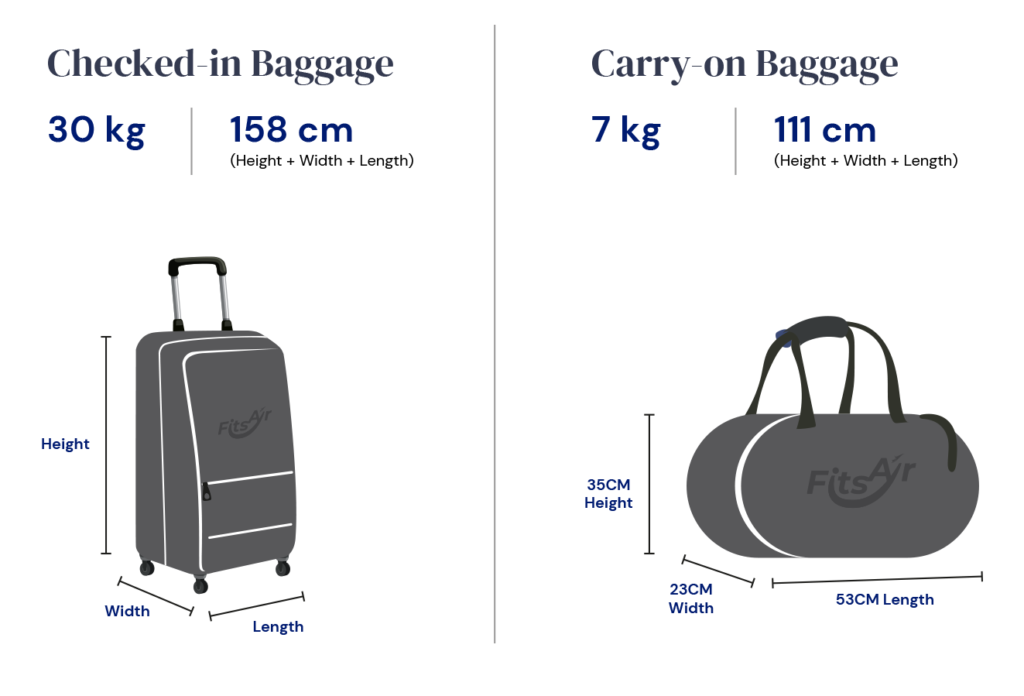
Standard Size Guidelines: While there isn’t a universally accepted standard, many major airlines adhere to approximate dimensions of 22 inches (56 cm) in height, 14 inches (36 cm) in width, and 9 inches (23 cm) in depth. Always verify the specific requirements of the airline you are flying with, as these can vary.
Weight Limitations: In addition to size, most airlines also impose weight restrictions on carry-on baggage, typically ranging from 15 to 22 pounds (7 to 10 kilograms). Again, confirm the specific limits of your carrier.
Personal Item Considerations: Alongside your main carry-on, most airlines permit one personal item, such as a backpack, purse, laptop bag, or briefcase. Ensure your personal item fits comfortably under the seat in front of you. Dimensions for personal items also vary, so check with your airline.
Budget Airline Nuances: Be particularly vigilant when flying with budget airlines, as their carry-on baggage allowances are often stricter and fees for exceeding them can be substantial.
Tools for Measurement: Invest in a reliable luggage scale and a soft measuring tape to ensure your carry-on and personal item comply with the airline’s regulations before you even leave for the airport.
The Art of Packing Light: Mastering Carry-On Baggage Efficiency
Successfully navigating the world with just a carry-on is less about restriction and more about strategic packing. Here are expert techniques to maximize your limited space and ensure you have everything you need without the bulk:
The Rolling vs. Folding Debate: Many seasoned travelers swear by the rolling method for clothes, as it can save space and minimize wrinkles. Experiment with both rolling and folding to see what works best for different types of garments.
Strategic Use of Packing Cubes: These fabric organizers are game-changers for carry-on packing. They help compress clothes, separate items, and keep your bag tidy and organized, making it easier to find what you need.
Multi-Functional Clothing is Your Ally: Opt for versatile clothing items that can be mixed and matched to create multiple outfits. Choose fabrics that are lightweight, wrinkle-resistant, and quick-drying.
Travel-Sized Toiletries are Essential: Invest in travel-sized versions of your essential toiletries or decant your regular products into reusable travel containers that comply with liquid restrictions (typically no more than 3.4 ounces or 100 milliliters per item, all fitting into a quart-sized, clear, zip-top bag).
Wear Your Heaviest Items: On travel days, wear your bulkiest shoes, jackets, and sweaters to free up valuable space in your carry-on.
Leave Unnecessary Items Behind: Be honest with yourself about what you truly need. Avoid packing “just in case” items that you are unlikely to use.
Utilize Every Nook and Cranny: Stuff socks and small items inside shoes, and use empty spaces within other items to maximize capacity.
Consider Compression Bags (with Caution): While compression bags can significantly reduce the volume of clothes, be mindful of potential wrinkles and ensure your bag still meets the airline’s size and weight restrictions.
Essential Items for Your Carry-On Baggage: The Must-Haves for a Smooth Journey
While packing light is crucial, certain items are non-negotiable for your carry-on baggage to ensure a comfortable and stress-free travel experience:
Important Documents: Passport, visa (if required), driver’s license, flight or train tickets, hotel reservations, and any other essential travel documents should always be kept readily accessible in your carry-on or personal item. Consider making digital copies as well.
Medications: Prescription medications, along with a copy of your prescription, should always be carried on. Never pack essential medications in checked baggage.
Valuables: Jewelry, electronics (laptops, tablets, phones, cameras), cash, credit cards, and other valuable items should be kept secure in your carry-on to prevent loss or damage.
Basic Toiletries: Travel-sized essentials like toothbrush, toothpaste, face wash, and deodorant can be a lifesaver, especially for overnight flights or in case of checked baggage delays.
A Change of Clothes: Packing a basic change of clothes in your carry-on can be invaluable in case of unexpected delays or lost luggage.
Entertainment: Books, e-readers, downloaded movies or shows, and noise-canceling headphones can make your journey more enjoyable.
Snacks and Hydration: Pack some non-perishable snacks and an empty reusable water bottle to stay nourished and hydrated, especially during long travel days.
Portable Charger: Keep your electronic devices powered up, especially during layovers or when access to outlets is limited.
Choosing the Right Carry-On Bag: A Matter of Form and Function
Selecting the ideal carry-on bag is just as important as what you pack inside it. Consider these factors when making your choice:
Size and Weight: Ensure the bag meets the typical carry-on size and weight restrictions of most major airlines.
Durability and Materials: Opt for a bag made from sturdy and durable materials that can withstand the rigors of travel.
Maneuverability: For wheeled carry-ons, ensure the wheels glide smoothly and the handle is comfortable to extend and retract.
Internal Organization: Look for bags with multiple compartments, pockets, and straps to help you organize your belongings efficiently.
Weight of the Bag Itself: A lighter empty bag allows you to pack more without exceeding weight limits.
Soft vs. Hard Shell: Soft-shell bags offer more flexibility in terms of packing capacity, while hard-shell bags provide better protection for fragile items. Consider your travel style and needs.
Navigating Airport Security with Your Carry-On: Tips for a Seamless Process
Understanding and adhering to airport security regulations regarding carry-on baggage can significantly expedite your passage through security checkpoints:
Liquids, Aerosols, and Gels (LAGs): Remember the 3-1-1 rule: liquids, aerosols, and gels must be in containers of 3.4 ounces (100 milliliters) or less, all placed in one quart-sized, clear, zip-top plastic bag.
Electronics: Be prepared to remove laptops and other large electronic devices from your carry-on for separate screening.
Sharp Objects: Sharp objects such as knives, scissors (with blades longer than 4 inches), and box cutters are generally prohibited in carry-on baggage. Pack these in your checked luggage.
Food and Drinks: Regulations regarding food and drinks in carry-on baggage can vary. It’s generally best to consume or dispose of any liquids exceeding the limit before reaching security.
Be Prepared and Organized: Have your liquids bag and electronics easily accessible to expedite the screening process.
The Future of Carry-On Travel: Embracing Innovation and Efficiency
The world of carry-on baggage is constantly evolving, with innovations focused on maximizing space, convenience, and sustainability. Keep an eye out for advancements in lightweight materials, smart bag features (such as built-in scales and charging ports), and modular packing systems that further streamline the travel experience.